Logo design packages: what’s actually included and what they cost?
 Jul 01,2026
“Logo design packages” sounds simple until you start comparing them and realize every studio bundles something different into the price. One agency’s “package” is a single PNG file and a two-week wait. Another’s is a full identity system with brand guidelines, file formats for every use case, and a designer who actually asks about your positioning before opening Illustrator.
That gap matters more than most founders realize, because the logo is never really the product. It’s the signal. A founder pitching investors with a mismatched, half-finished visual identity is already fighting an uphill battle before the first slide loads. This guide breaks down what logo design packages typically include, what they cost at each tier, and where a basic package starts to work against you. The brand identity packages covers the fuller identity system if you’re already past the logo-only stage.
What is a logo design package?
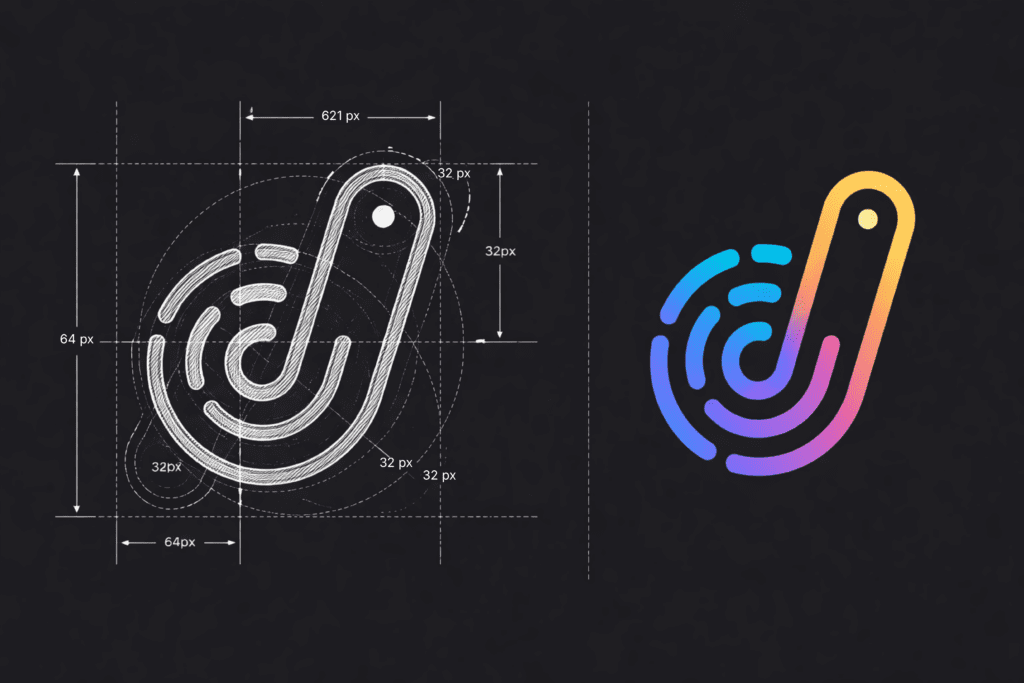
Ask ten designers what’s in a logo package and you’ll get ten different answers. At minimum, it usually means a primary logo mark, a handful of color and format variations, and delivery in a few standard file types like PNG, SVG, or PDF. Some packages stop there. Better ones add a horizontal and stacked lockup, a favicon-ready mark, and basic usage notes so you’re not guessing which file to hand your printer six months from now.
The term gets used loosely because “package” implies more structure than most freelance arrangements actually deliver. A real package has fixed deliverables and a fixed price, not an hourly clock running quietly in the background. So how do you know if what you’re being sold is a real system, or just a fancy word for one file?
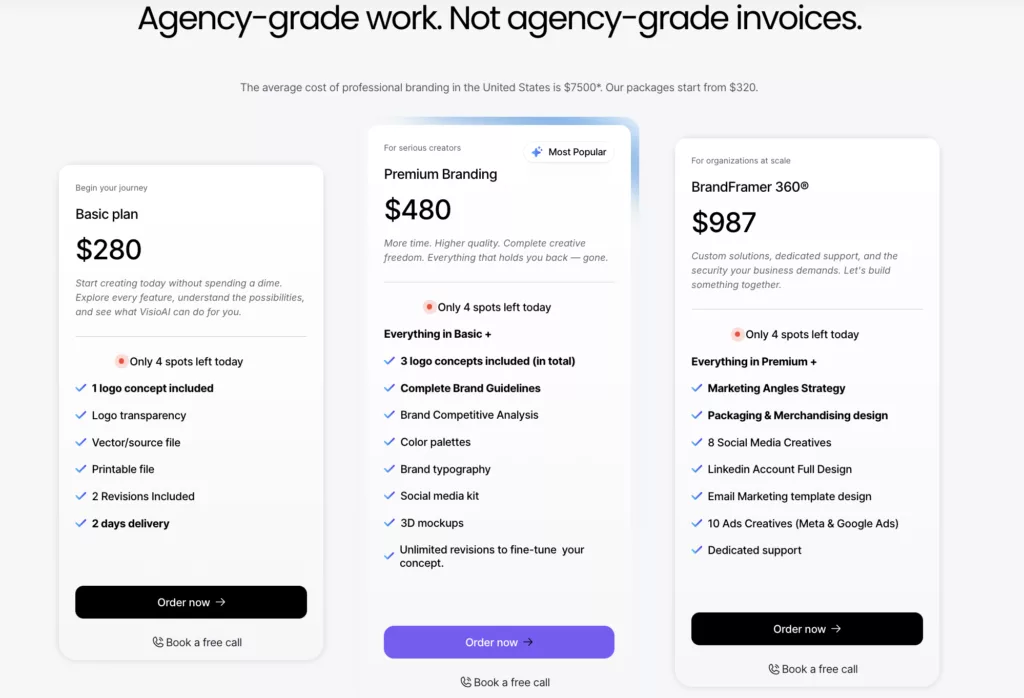
Every Brandframer package spells out exactly what’s included before you pay anything, from the $280 Basic logo system to the $987 BrandFramer 360. No hourly surprises, no scope creep. Just a defined deliverable at a defined price.
How much do logo design packages cost?
Prices for logo packages run from under $50 on marketplace sites to five figures at branding agencies. But the range alone tells you almost nothing. What matters is what sits inside that number.
At the low end, under $200, you’re often paying for a template-based mark. One freelancer, one round of revisions if you’re lucky. No strategy, no system, just a file.
Once you cross into the $250 to $500 range, that changes. You start getting multiple concepts, real revision rounds, a full file set built to last. Brandframer’s $280 Basic sits right at that line: a logo concept with 2 to 3 revisions, not a rushed template.
Above $500, agencies typically add brand strategy and messaging direction, sometimes a full identity system rather than just a mark.
Brandframer sits in that middle tier deliberately, because a logo without a system behind it tends to age badly. Our article “how much does a logo cost” breaks down pricing by tier in more depth if you want the full comparison.
Brandframer delivers a complete brand identity system, logo, color palette, typography, and brand guidelines, in 48 hours. Plans start at $280.
What should be included in a real logo design package?
So what actually separates a package from a single graphic file? First, it should include the primary logo along with secondary and icon-only versions. Indeed, your logo needs to work at the size of a favicon and the size of a storefront sign. Then it should include a defined color palette with exact hex and CMYK values. And it needs typography guidance, because a strong mark paired with mismatched fonts on your website undoes half the work.
The best packages go one step further and include a short brand guidelines document. That single file is what keeps your brand consistent when a new hire builds a slide deck or a freelancer designs your next ad, without you having to explain your color codes from memory every time. AIGA, the largest professional design association in the US, covers this exact topic in its branding resources.
Not sure which tier gets you a full system versus just a mark? Brandframer’s three plans are built around exactly that question:
- $280 covers the essentials,
- $480 gets you the full visual identity,
- $987 adds brand strategy on top.
Can AI tools like ChatGPT replace a logo design package?
Not really, and here’s the honest version of why. AI tools can generate a decent-looking mark in seconds, and for a side project or an early test of a business idea, that might genuinely be enough. This is the one place where our advice doesn’t fully apply: if you’re validating an idea before you’ve made a single sale, spending real money on a logo package is probably premature.
But once you’re pitching, hiring, or putting a brand in front of paying customers, the gap shows up fast. AI-generated logos tend to reuse the same visual tropes (the abstract swoosh, the geometric leaf, the gradient circle) because they’re pattern-matching against thousands of existing logos rather than designing from your actual positioning. Nielsen Norman Group tested AI design tools directly and found they consistently produced generic, templatized outputs even with detailed, specific prompts. They also rarely come with the file formats, guidelines, or strategic reasoning a real package includes. You end up needing a redo anyway, just later, and usually at a worse moment.
Brandframer has built complete identity systems for founders in SaaS, consulting, e-commerce, and professional services, each one designed around actual positioning rather than a generated pattern. In 48 hours, starting at $280.
How do you choose the right logo package for your stage?
Start with what you need this quarter, not what you might need eventually. A pre-revenue founder validating an idea has different needs than one closing a seed round in six weeks, and being honest about which one you are saves you money either way.
If you need something credible for a pitch deck or your first client calls, a mid-tier package that includes the logo system and basic guidelines usually covers it. If you’re scaling a team or launching paid ads, you’ll want the fuller system, including messaging direction, so everyone building marketing assets is pulling from the same source. Our article “branding packages for startups” walks through this by company stage if you want a more detailed breakdown.
What are the signs a basic logo package isn’t enough?
How do you know when you’ve outgrown it? You’ll usually feel it before you can articulate it. If your team keeps asking “which version of the logo do I use” or your marketing assets look like they came from three different companies, that’s not a logo problem anymore. It’s a system problem.
Fundraising is another clear signal. Investors see hundreds of decks a year, and a founder who shows up with a mismatched color palette and no brand guidelines is quietly telling them something about attention to detail, whether that’s fair or not. If you’re hiring a design or marketing person soon, handing them a guidelines document instead of a folder of loose files will save you weeks of back-and-forth.
The real question behind “logo design packages” isn’t which one is cheapest. It’s which one you’ll still be using in a year without patching around its gaps. A $50 file might get you through a launch, but it rarely survives your first serious pitch, hire, or ad campaign intact.
Founders who invest early in a complete package, tend to spend less over time, because they’re not paying to redo the same work six months later.