The best 99designs alternative for logo and brand identity in 2026
 Jul 25,2026
If you have ever run a design contest, you know the drill. You write a brief, wait a week, and end up scrolling through forty submissions that all look like they came from the same stock template. Some are decent. None of them feel like they understand your business. That is the moment most people start searching for a 99designs alternative, and for good reason.
99designs works fine for a quick logo when you are not picky about the outcome. But if you need a brand identity that has to hold up across a pitch deck, a website, packaging, and a hundred social posts, contest-based design starts to show its limits fast. This article breaks down the real alternatives, what each one is actually built for, and how to pick the one that fits your budget and timeline instead of dragging out for weeks.
Why people look for a 99designs alternative?
The contest model has one structural flaw: nobody on the other end is actually responsible for your outcome. Dozens of designers submit speculative work hoping to win a prize, which means most of them are not reading your brief closely enough to nail it on the first try. You get volume, not judgment.
There is also the consistency problem. A contest gets you a logo. It rarely gets you a color system, typography rules, or usage guidelines that keep your brand looking like one brand across every touchpoint. A founder who shows up to a sales call with a nice logo and no guidelines for how to use it is already sending a slightly chaotic first impression, even if they do not realize it. The same goes for a small business owner rolling out a new storefront sign, or a marketing lead briefing an agency on brand assets they cannot fully explain.
And then there is the timeline. Most contests run seven to fourteen days before you even see a winner, and that is before revisions. If you are three weeks from a launch, that math does not work.
The three types of 99designs alternatives, and the one most lists miss
Most comparisons split the market into three buckets. Contest platforms like DesignCrowd or Hatchwise post your brief to a crowd and let you pick a winner. Subscription services like Penji or Design Pickle charge a flat monthly fee for unlimited requests, which is great if you have ongoing design needs but overkill if you just need a brand identity once. Freelance marketplaces like Fiverr or Upwork let you hire someone directly, though quality varies enough that you will spend real time vetting portfolios.
What most of these lists skip is a fourth category: fixed-price, fully scoped brand identity systems delivered on a short, fixed timeline. Instead of a contest’s uncertainty or a subscription’s open-ended commitment, you get a defined deliverable (logo, color palette, typography, brand guidelines) for a set price and a set number of days. No guessing what you will end up paying, and no month-to-month subscription for something you only needed once.
This is where Brandframer sits. Every project ships in 48 hours, built by a team that has completed thousands of identity systems across ten years and nearly every industry, with three fixed-price tiers so you know the total cost before you commit to anything.
Best 99designs alternatives for logo and brand identity
Here is how the main options stack up if brand identity, not general graphic design, is the actual job.
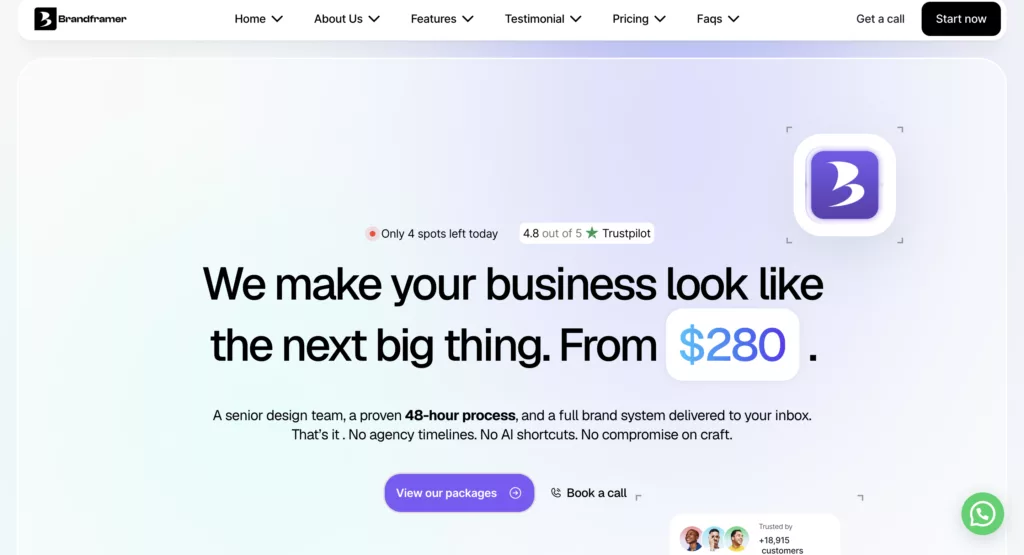
Brandframer delivers a complete visual identity system (logo, color palette, typography, and brand guidelines) in 48 hours, across three fixed tiers: Basic at $280, Premium at $480, and BrandFramer 360 at $987. There is no contest and no bidding war. You brief the team once, and you get a finished system built by people who have done this thousands of times across nearly every industry. For anyone who needs something presentable fast, without spending days sorting through speculative submissions, this is built exactly for that pace.
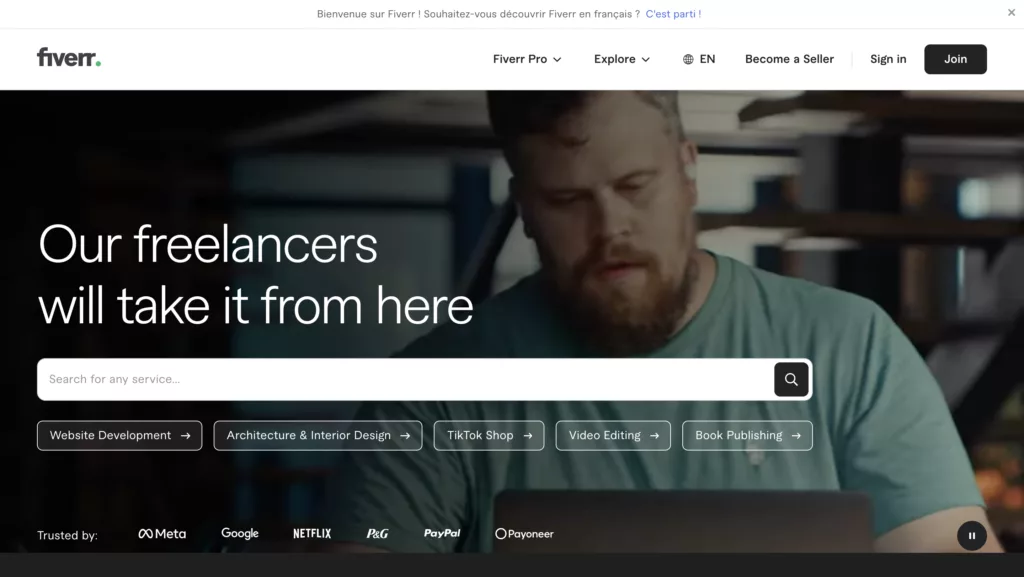
Fiverr works if your budget is genuinely tight and you are willing to vet sellers yourself. Pricing starts around $5 for basic gigs, though a usable logo realistically runs somewhere between $50 and $500 depending on who you hire. Quality swings widely from one seller to the next, so plan on spending time reading reviews before you commit.
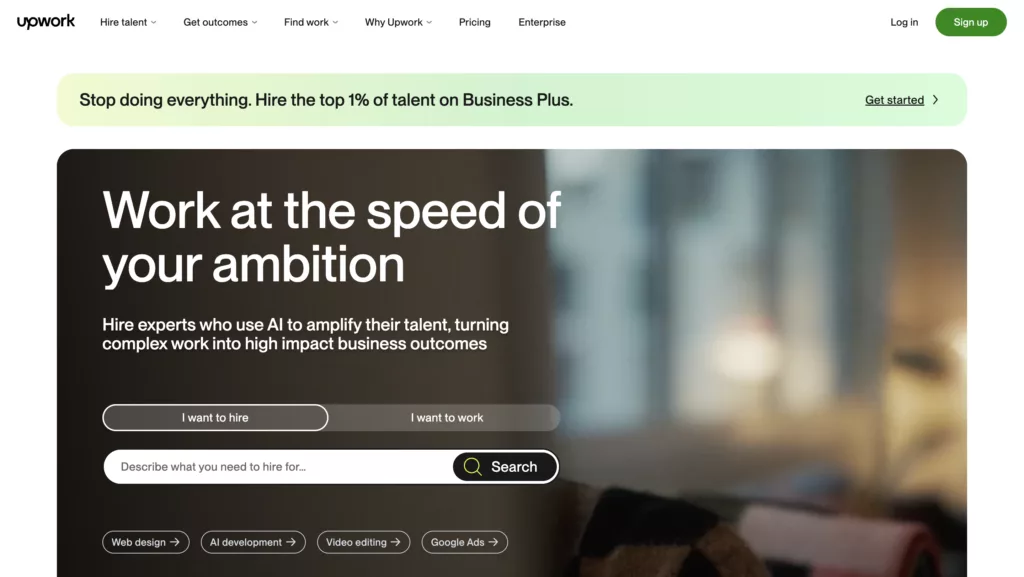
Upwork gives you more control since you interview candidates and review portfolios before hiring, rather than picking blind from contest entries. Rates range from around $15 an hour for junior designers to well over $150 for senior specialists, and Upwork adds its own fees on top. It is a solid option if you have the time to manage the hiring process yourself.
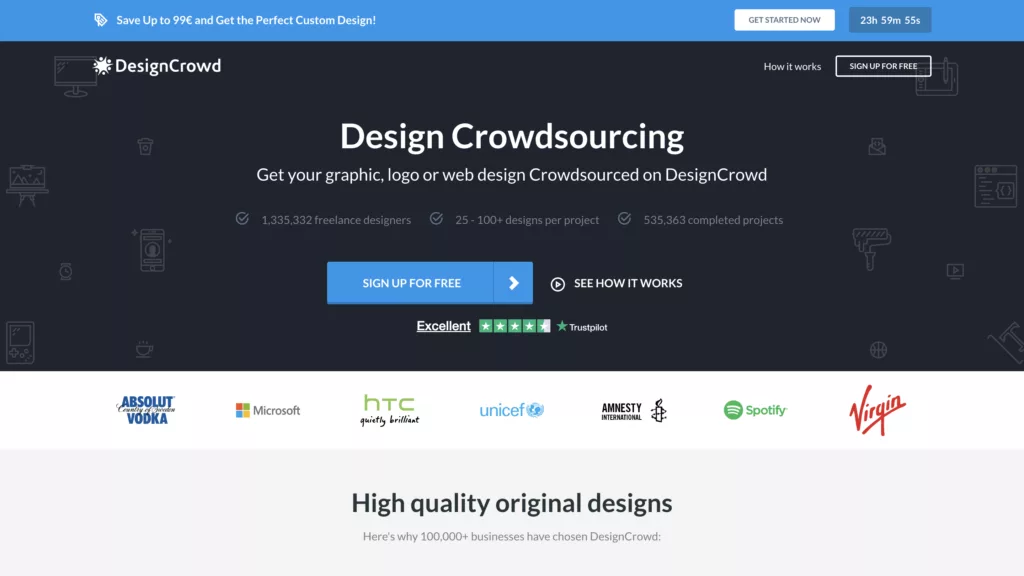
DesignCrowd runs the same contest format as 99designs, just with a different pool of designers and generally lower prices. If you liked the idea of 99designs but wanted a fresh crowd, this is the closest thing to a direct swap, with the same tradeoffs around timeline and consistency.
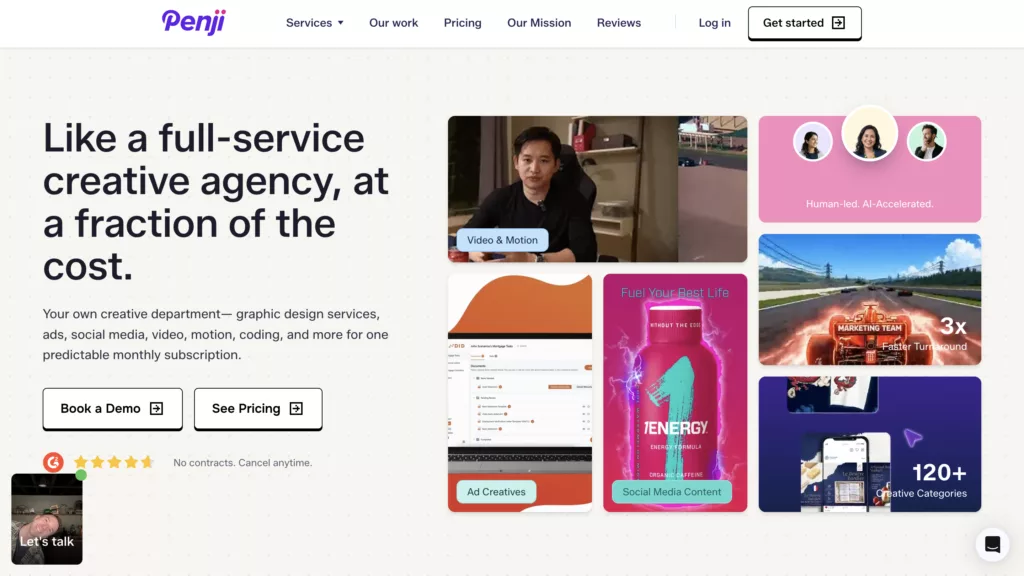
Penji and similar subscription platforms make sense if you need a steady stream of design work every month, not just a one-time identity project. Pricing usually starts around $499 a month for unlimited requests. That is a lot of overhead if all you actually need is a logo and a guidelines document once, then nothing after.
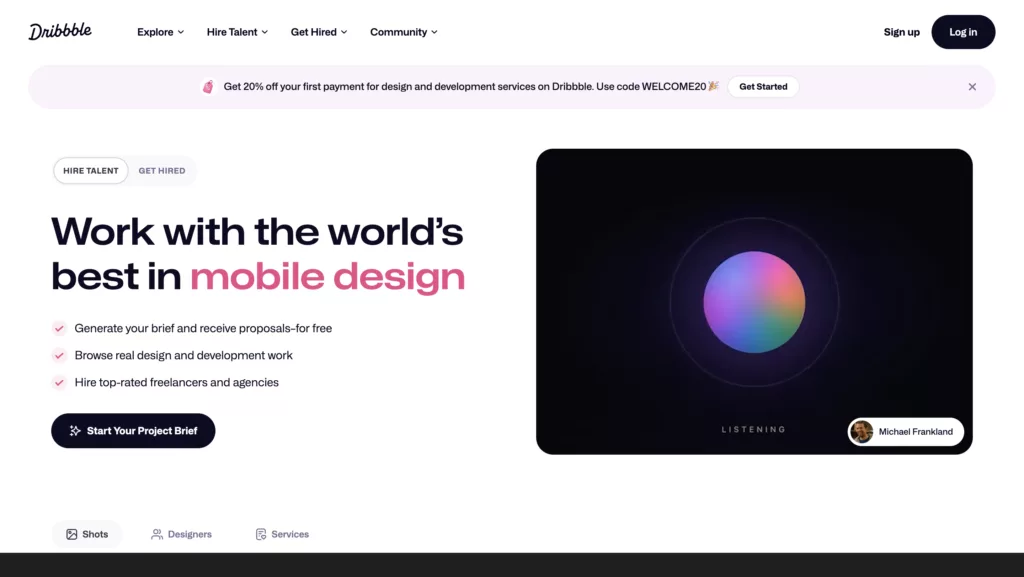
Dribbble is less a hiring platform and more a portfolio directory. You browse designer profiles and reach out directly, which is useful for finding a specific style but slower than platforms built around a structured hiring flow.
Designhill blends contests, direct hiring, and an AI logo generator under one roof, with plans starting around $249. It is a reasonable middle ground if you want contest-style variety with the option to work one-on-one instead.
Design Pickle is a subscription service built around a dedicated designer and unlimited revisions, generally starting above $1,000 a month. It fits businesses with constant, varied design needs more than a single branding project.
Hatchwise runs a lower-cost contest model, with entry points as low as $99. Submission volume can be high, though quality still varies by contest and the format still requires active feedback from you to steer results.
DesignContest offers the same contest structure as 99designs with a money-back guarantee attached, plus the option to hire a designer directly for a more one-on-one project.
Toptal sits at the opposite end of the spectrum, an elite network that vets the top few percent of applicants for high-stakes UX and product design work. Pricing runs at a premium and a deposit is typically required, which makes it a better fit for complex digital products than a standalone brand identity.
Freelancer functions similarly to Upwork and Fiverr, letting you post a project or run a contest and review bids from a large global pool. It covers virtually every design category, though quality control depends heavily on how much vetting you do yourself.
ManyPixels is a design and web subscription service aimed at businesses that need a broad, ongoing mix of graphic and digital work rather than a single defined project.
Crowdspring runs a global contest model similar to 99designs, covering logo, web, and product design with its own pool of freelance creatives.
Superside is a higher-end creative subscription built for scale-up teams that need consistent output across many campaigns, generally priced above what a single branding project would require.
Canva is not a hiring platform at all, but a DIY design tool with templates and a brand kit feature. It works for a rough, self-made placeholder logo, though it will not give you a distinct mark or a real guidelines system.
Worth saying plainly: if your business genuinely needs unlimited ongoing design output (weekly social graphics, constant ad creative, ever-changing landing pages) a subscription service is probably the better fit than a one-time identity package. Brandframer is built for the system itself, not for endless month-to-month requests. Know which one you actually need before you pick.
Speed is the whole point of skipping a contest in the first place. See what a 48-hour brand identity turnaround actually looks like and decide if that timeline works for your launch date.
Contest-based vs fixed-price vs subscription: which model fits your budget?
The honest answer depends on how often you need design work and how much certainty you want going in.
Contests make sense if you genuinely enjoy seeing a wide range of creative directions and have two weeks to spare reviewing submissions. You will pay a fixed prize amount, but you are trading time for that flexibility, and the winning design still might need real revision work afterward.
Subscriptions make sense if design is a recurring, ongoing need across your business, not a one-time project. The monthly fee only pays for itself if you are actually submitting requests every week.
Fixed-price systems make sense when you know exactly what you need (a logo, a color palette, typography, guidelines) and you want a defined cost and a defined delivery date, without a design contest’s guesswork or a subscription’s open-ended commitment. For a founder trying to get pitch-ready, or a small business trying to launch on schedule, that predictability tends to matter more than having forty logo options to sort through.
Most businesses, especially early on, do not actually need a full-time creative subscription. They need one solid identity system, done right, done once. This breakdown of what startups typically spend on branding is worth a look before you commit a budget line to any option on this list.
What a real brand identity system includes that a single logo does not?
A logo file alone will not carry your brand very far. What actually holds a brand together across a website, a deck, a product, and a hundred future marketing assets is the system behind that logo: a defined color palette, a typography hierarchy, spacing rules, and clear guidelines for how the mark gets used in different contexts.
Skip that step, and here is what tends to happen six months later. Your Instagram uses one blue, your website uses a slightly different one, your pitch deck uses a font nobody remembers choosing, and none of it looks like it came from the same company. That inconsistency is invisible to you because you see it every day, but it is glaring to anyone encountering your brand for the first time.
Understanding what brand identity actually covers is a useful starting point if you are still deciding whether you need a full system or just a logo file. Most businesses realize partway through a growth phase that they needed the full system from day one.
Want to skip the trial and error? Brandframer builds the complete system (not just the logo) in 48 hours, so you are covered before the inconsistency ever becomes a problem.
Common questions about switching from 99designs
Is 99designs worth it in 2026?
It depends what you need. For a simple, low-stakes logo where you are not picky about outcome, a 99designs contest can work fine. For a business that needs a cohesive brand identity fast and does not want to sort through dozens of speculative submissions, a fixed-price system or a curated hire is usually a better use of time.
Is 99designs better than Fiverr?
Neither is universally better. 99designs gives you a range of concepts through a contest format, while Fiverr gives you direct access to individual sellers at a wide range of price points. Fiverr requires more vetting on your end, but it can be cheaper for very simple projects.
How long does a full brand identity take?
It ranges widely by provider. Contest platforms typically take seven to fourteen days before you even see a winner. Freelancers vary based on availability. Fixed-price systems like Brandframer are built to deliver a complete package (logo, colors, typography, guidelines) within 48 hours.
Do I own the rights to my design?
On most platforms, yes, once the project is complete and paid for, though the terms vary. Always confirm ownership and usage rights before you start a project, regardless of which platform or service you choose.
The bottom line
99designs built a business on the idea that more submissions means more choice. In practice, more submissions often just means more time spent sorting through work that was not built with your brand specifically in mind. If you know what you need (a logo, a color system, typography, and guidelines that actually hold together) a fixed-price, fixed-timeline system tends to get you there faster and with fewer surprises than a contest or an open-ended subscription.
Brandframer builds that complete system in 48 hours, across three fixed-price tiers, backed by ten years and thousands of completed projects across nearly every industry. No contest, no guessing at the final cost, no month-to-month subscription for a one-time need. If you are ready to skip the sorting and get a brand identity that actually holds up, start your project with Brandframer and have it in hand in two days.