What brand identity design services include ?
 Jun 22,2026
You search “brand identity design services” and get quotes ranging from $99 to $25,000 for what, on the surface, looks like the same thing: a logo and some colors. The confusion is completely understandable. The category is poorly defined, providers describe their work inconsistently, and nobody has an obvious incentive to explain the gap honestly.
But the stakes here are real. A brand identity you outgrow in six months, or one that never worked to begin with, doesn’t just waste money. It costs you credibility at exactly the moments that matter: the sales call, the investor deck, the product launch. This article breaks down what brand identity design services actually include, what they cost across different types of providers, and how to evaluate whether what you’re buying is complete before you commit.
What brand identity design services actually include ?
A brand identity design service is a professional service that creates the complete visual system for your business: the logo, color palette, typography, brand guidelines, and supporting assets that define how your brand looks across every touchpoint. Not just a logo. A system.
Here’s where the confusion starts. A lot of what gets sold as “brand identity” is just a logo file. One mark, one color, delivered as a PNG. That’s not a brand identity service. That’s a logo service, and there’s nothing wrong with it if that’s what you need. But if you’re about to build a website, a deck, a social presence, and a sales process, a single file won’t carry you very far.
A complete brand identity package typically covers the following. First, the logo suite: not just one version, but a primary mark, a secondary version for tight spaces, a brandmark or symbol for use as a favicon and app icon, and light and dark background variants. If you want to understand the distinction between a symbol-based logo and a text-based one, the differences between what is a brandmark and what is a wordmark matter more than most founders realize before they’re trying to place a logo on a dark background.
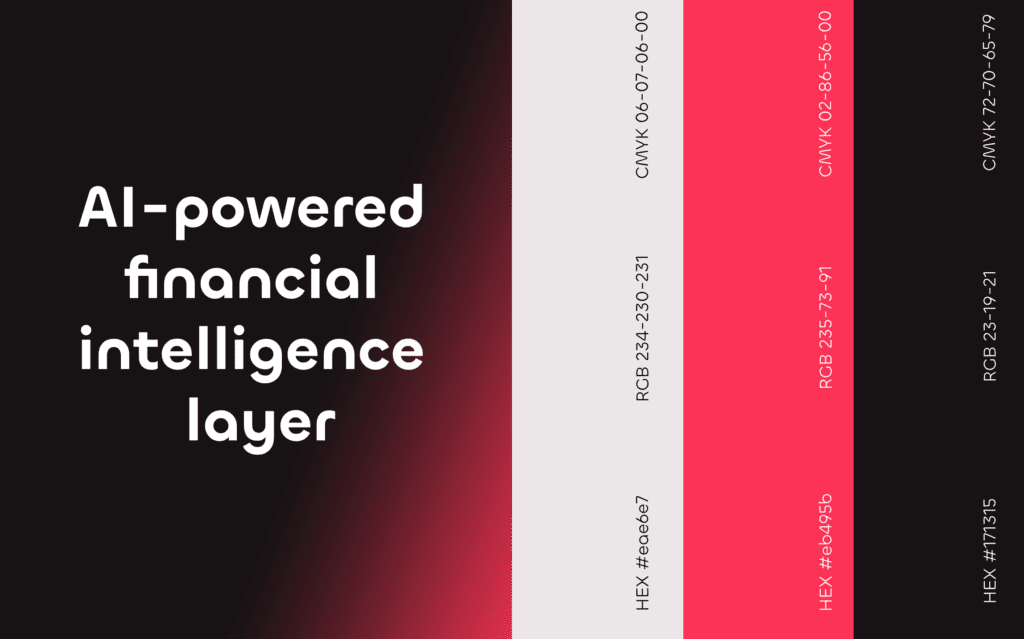
Then comes the color palette, with actual hex codes, RGB, and CMYK values, not a screenshot of some swatches. A typography system that defines which fonts you use, at what weights, for what purposes. And finally, a brand guidelines document that ties it all together: usage rules, spacing, what not to do, and enough visual direction that a freelance developer or a new marketing hire can produce something that looks like it came from your company. For a sense of what strong guidelines actually look like in practice, brand guidelines examples shows the range from minimal to comprehensive.
That’s the core. Everything built on top (social templates, presentation decks, stationery) extends the system but isn’t required at launch for every business.
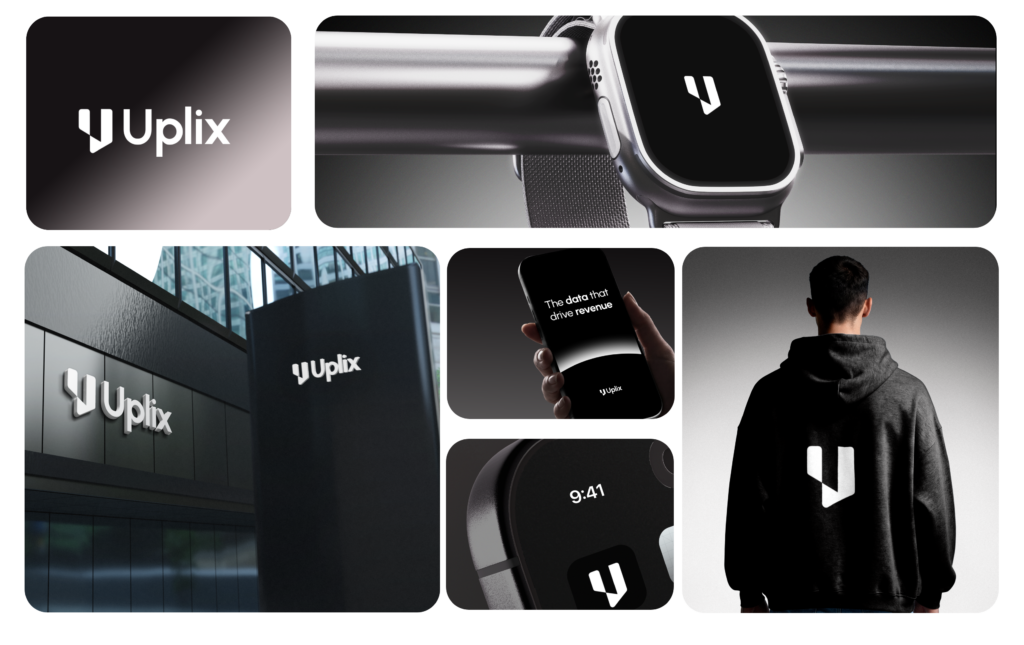
Brandframer delivers a complete brand identity system in 48 hours: logo suite, color palette, typography, brand guidelines, and everything in between. Plans start at $280.
What is a brand identity service, and how is it different from branding?
A brand identity service handles the visual layer: how your brand looks. Branding, in its broader sense, covers positioning, messaging, naming, and the strategic decisions that inform how a company differentiates itself in the market. Brand identity design sits downstream of that. It gives visual form to decisions that, ideally, have already been made about who you are and who you’re for.
That distinction matters when you’re evaluating providers. Some services that call themselves brand identity agencies are actually doing brand strategy work. Some are doing only visual design. And some are bundling discovery workshops and stakeholder interviews into a package you’d pay $15,000 for when what you actually needed was a logo suite and a guidelines doc.
Worth knowing: if you haven’t done brand strategy work yet, that’s not a blocker. Most early-stage founders build their visual identity first and refine the strategy as they learn. The mistake isn’t skipping strategy early. It’s buying a logo and calling it a brand.
The four types of providers offering brand identity design services
- Freelancers are the most accessible entry point. A junior freelancer on Upwork or Fiverr might charge $20 to $500 for a logo. An experienced freelancer who delivers a full identity system, including guidelines, typically runs $2,000 to $8,000. The range is huge because “freelancer” is a category, not a quality signal. The risks are variable quality, inconsistent communication, and scope creep if the deliverables aren’t defined explicitly upfront. The advantage is flexibility and, when you find the right person, a very direct working relationship.
- Traditional branding agencies operate in a completely different price bracket. A boutique agency typically starts at $10,000 and scales to $30,000 or more for a full identity system. Mid-size and specialist agencies go higher, sometimes significantly. What you’re paying for at that level is process: discovery sessions, competitive research, strategic frameworks, multiple rounds of concept development, and a team that’s produced work at scale. For an established company going through a meaningful rebrand, that process has real value. For a founder at pre-seed or early revenue, it’s mostly overhead you don’t need yet. For a deeper look at how to navigate providers at that level, who develops brand identity for SaaS companies walks through the tradeoffs honestly.
- DIY tools like Canva, Looka, or Brandmark are worth mentioning because a lot of founders try them first. They’re cheap, fast, and the output looks like other Looka logos. Which is the problem. A founder who shows up to a Series A meeting with a logo that a VC’s associate recognizes from three other decks has already lost ground before saying a word. DIY tools can get you to a placeholder. They won’t build credibility.
- Specialized brand identity design like Brandframer sit between the freelancer and agency models. They offer professional, systematic output at fixed prices, with defined scopes and faster timelines. No retainer, no open-ended billing, no twelve-week discovery process. Brandframer fits here: a studio built specifically for founders who want agency-quality visual identity without the agency overhead. The scope is clear, the timeline is 48 hours, and the pricing is transparent.
Every Brandframer package includes the full visual identity system, from the $280 Basic to the $987 BrandFramer 360. No retainer. No surprise invoices. Just a complete brand, delivered fast.
What brand identity design services cost in 2026 ?
Brand identity design costs range from under $100 at the low end to $75,000 or more at the top. The gap is wide. It reflects the scope of deliverables, the level of strategic input, and the type of provider. For a more detailed breakdown of how pricing maps to deliverables, how much does branding cost covers the full range.
Here’s how the landscape maps out honestly. Entry-level freelancers and logo platforms sit in the $50 to $1,500 range.
Experienced freelancers who deliver a full system run $800 to $8,000, depending on scope, experience, and how clearly the deliverables are defined. Add revision cycles that weren’t scoped properly, and that number moves.
Boutique branding agencies start around $10,000 and scale to $30,000. For an established business with stakeholder complexity and a real rebrand need, that investment makes sense. For most early-stage founders, it doesn’t.
Brandframer’s three plans are built around exactly that question: $280 if you need the essentials, $480 if you want the full visual system with more creative depth, $987 if you want brand strategy included alongside the complete visual identity. Compare them here !
One number most buyers underestimate is revision cost. A flat-fee quote from a freelancer can climb quickly if revisions aren’t capped in the contract. Always confirm what rounds of revision are included before the project starts.
What separates a complete brand identity service from a logo-only package?
The gap between a logo and a brand identity system is where most founders lose money twice: once paying for the logo, and again when they need everything else built from scratch six months later.
A logo is a mark. A brand identity system is the infrastructure around it. Without a defined color palette, you’ll make inconsistent decisions every time you design something. Without a typography system, your website, your deck, and your social posts will look like they came from three different companies. And without brand guidelines, anyone who touches your brand, whether it’s a developer, a contractor, or a new hire, is guessing.
Brand guidelines are often the most undervalued part of the package. A well-built guidelines document doesn’t need to be 60 pages. What it needs to do is give anyone who picks it up enough direction to produce on-brand work without asking you for approval every time. That means clear rules on logo placement and spacing, color usage hierarchy, typography scales, and what not to do as explicitly as what to do.
The other thing a complete service includes that a logo-only package won’t: the right file formats. A logo suite should come with vector source files (AI or EPS), a transparent PNG for digital, a high-resolution version for print, and dark and light variants. A single PNG export is not a handoff. If a provider doesn’t mention file formats in their scope, ask.
This is why what a brand identity package actually includes matters as a question to ask before you buy, not after.
How to evaluate a brand identity design service before you buy?
The portfolio is the first filter. Look at it with a specific question in mind: does this work look like it could belong to your industry, or is it all one aesthetic? A studio that can only design in one style will put your brand in that box regardless of whether it fits.
After the portfolio, look at the deliverables list. Not the marketing description of the deliverables. The actual list. Ask what’s included explicitly: primary logo, secondary logo, brandmark, color palette with hex codes, typography selections and licensing, brand guidelines document, and final file formats. If a provider gets vague at this point, that’s informative.
Revision policy is the next question. How many rounds are included? What counts as a revision versus a new direction? And what’s the timeline, not the aspirational one but the contractual one?
One thing worth checking that most founders skip: who’s actually doing the work? At agencies, the principal who sells the project often isn’t the designer who executes it. At studios and with freelancers, you’re more likely to deal with the person doing the work directly. Neither model is inherently better, but you should know which one you’re in.
Finally, consider whether the service includes any strategic input. Some studios bring brand positioning and target audience thinking into the process. Others are pure execution. Both are valid, but they’re different purchases. If you already know who you are and who you’re for, pure execution at the right quality level is all you need. If you’re still working that out, the extra strategic layer might be worth paying for.
When to invest in brand identity design services?
- Pre-launch is actually one of the better moments to invest, provided you’ve validated the core idea. Getting the visual foundation right before you build the website, start the content, and design the first sales deck saves you from rebuilding everything six months later. The caveat: if you’re still testing the concept and the name might change, hold off.
- Post-first-revenue is often the most natural trigger. You’ve proven the thing works. Now you’re presenting to a real prospect base, and the Canva logo that got you through the beta phase is starting to cost you in the room. This is the stage where brand identity directly affects close rates.
- Pre-fundraise is a hard deadline. If you’re pitching to institutional investors, your deck and your brand will be evaluated alongside everything else. A polished, cohesive visual identity doesn’t guarantee a check, but a rough one raises questions you’d rather not have to answer. For startups specifically, branding packages for startups covers what founders at that stage actually need.
- Rebrand scenarios are where the calculus changes. If you’ve grown beyond your original identity, changed your positioning, or merged with another entity, the value of a more thorough process goes up. This is also where agencies earn their fees, because the problem isn’t just design, it’s managing a transition.
One honest caveat: if your business model is still pivoting month to month, don’t invest heavily in brand identity yet. The identity needs to reflect something stable enough to be worth building around. Get that stability first.
Conclusion
You now know what brand identity design services actually include, what they realistically cost across every type of provider, and what to look for before committing to one. The decision is simpler than the category makes it appear.
If you’re an early-stage founder who needs a complete visual identity system, without a six-figure agency price tag or a three-month timeline, Brandframer was built for exactly that moment. A complete brand identity system, delivered in 48 hours, starting at $280. Logo suite, color palette, typography, brand guidelines, and everything you need to show up credibly wherever your brand appears.