What is a letterhead? The Complete Guide
 Jul 24,2026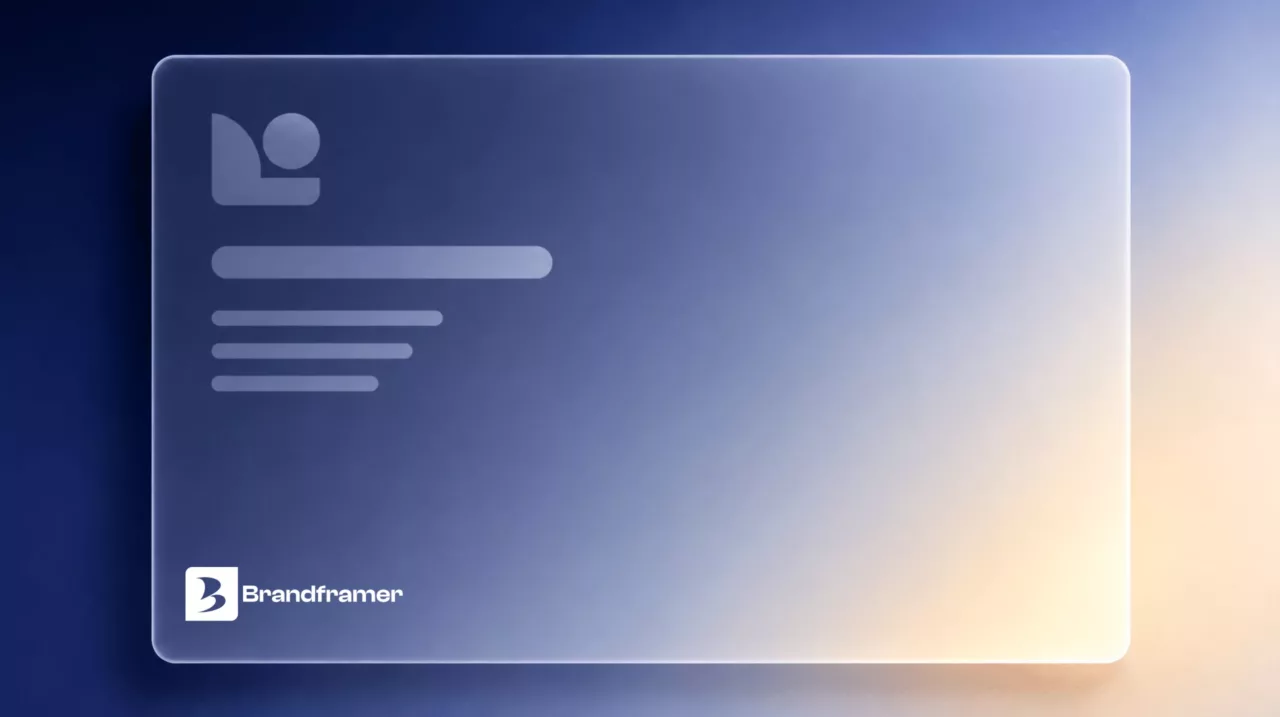
A letterhead is the header that appears at the top of your business documents. It typically carries your logo, your company name, and your contact details, and it turns a plain page into something that looks like it came from a real, established company rather than someone’s laptop at midnight.
That sounds simple. And it is, on paper. But the letterhead question comes up at oddly high-stakes moments: a lawyer asking for one before drafting a contract, an investor expecting one on a term sheet cover letter, a client wondering why your invoice looks like it was made in Word in 2009. This guide covers what a letterhead actually is, what it needs to include, and when it matters enough to get right.
What is a letterhead, exactly?
A letterhead is the standardized header used on official business correspondence, invoices, proposals, and contracts. It sits at the top of the page and usually includes your logo, business name, and contact information, sometimes with a matching footer for consistency.
Historically, this meant a physical sheet of pre-printed stationery, and the format goes back further than most founders assume. The Cooper Hewitt, Smithsonian Design Museum holds an entire collection of historic letterheads, a reminder that companies have been solving this exact credibility problem for well over a century.
Today, it’s almost always a digital template, a header baked into a Word doc, a Google Docs template, or a branded PDF layout that gets reused across every formal document a company sends out. The function hasn’t changed. Only the medium has.
Think of it as your business card’s more formal cousin. A business card gets handed over in a hallway. A letterhead shows up when something official is happening, a contract, an invoice, a legal notice, and it needs to carry the same weight.
Speed matters here too. If you’re setting one up as part of a larger identity system, you don’t need weeks of back and forth to get it right. Brandframer builds your full visual identity system, letterhead included, in 48 hours.
What does a letterhead include?
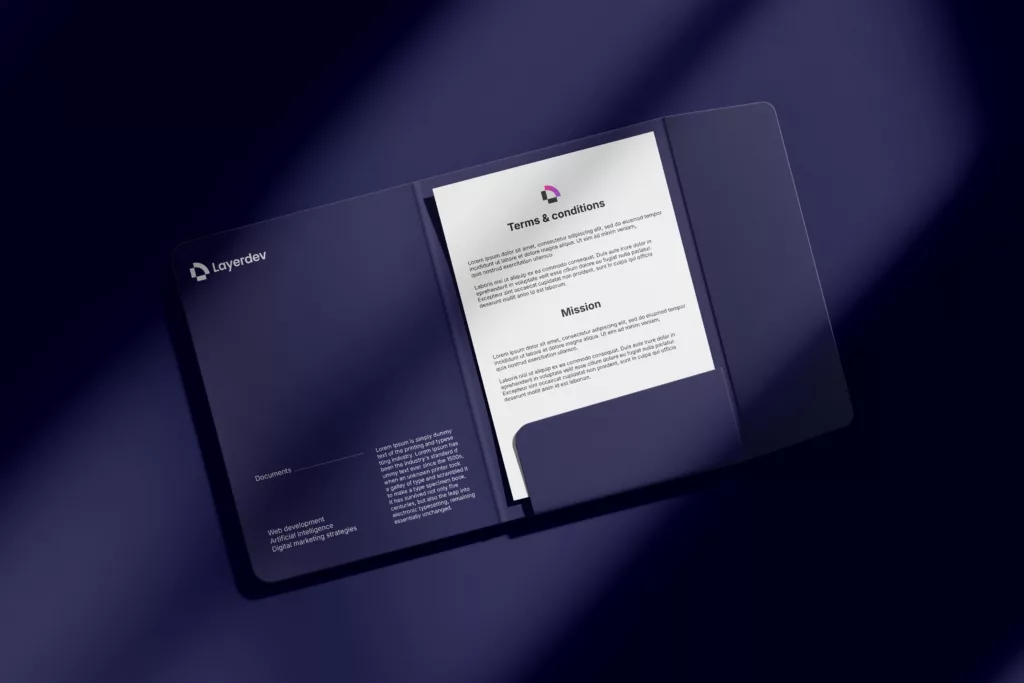
A proper letterhead has four core elements: your logo, your company name, your contact information, and consistent brand colors and fonts pulled straight from your visual identity.
The logo goes at the top, usually left-aligned or centered depending on your brand style. Below or beside it, your legal or trading name. Contact information follows: address, phone, email, and website, though not every field is required on every document. A footer often repeats a shortened version, sometimes with a registration number or tagline if the business needs one for compliance.
Here’s the part people get wrong most often. Picture a fintech startup whose logo uses a sharp navy sans serif, built by a designer who nailed the brand. But the invoice header defaults to a script font in pale gray, because the letterhead was thrown together separately in Canva and never touched the actual brand files. Two documents, same company, and they look like they came from two different businesses. That’s the credibility leak most founders don’t notice until a client points it out.
If your logo, typography, and color palette aren’t already locked into a coherent system, start with a wordmark or brandmark before building anything on top of it.
What is a letterhead used for?
A letterhead for a business is used on any document that needs to look official: contracts, invoices, proposals, formal letters, certificates, and internal memos that require a clear source of authority.
Invoices are the most common daily use case for a small business. A letterhead on a $40,000 invoice sent to an enterprise client signals that you’re a real, organized operation, which matters more than most founders expect when a procurement department is deciding whether to pay on time or push it to next quarter. Proposals and contracts carry legal or financial weight, and a matching letterhead adds a layer of credibility before anyone reads a word of the content.
There’s also a quieter use case: fundraising. A term sheet cover letter sent to a lead investor, or a data room document responding to diligence questions, often goes out on letterhead, and investors notice when a company doesn’t have one. It’s a small detail, but it’s the kind of small detail that adds up during due diligence.
A founder who shows up to a fundraise with a Canva logo and no consistent document system is already working against a subtle bias before the first meeting even starts. That’s not fair, but it’s how it works.
How do you make a letterhead?
You can build a letterhead two ways: design it yourself in a tool like Canva or Google Docs, or have it designed as part of a professional brand identity system.
DIY works fine for very early-stage use. A solo consultant invoicing three local clients a month doesn’t need a designed system, a clean free template gets the job done, and nobody’s going to lose a deal over a slightly generic layout at that stage.
The calculation changes once documents start carrying real weight. A startup about to send its first signed vendor contract to a Fortune 500 procurement team is in a different situation entirely: a mismatched or amateur-looking letterhead becomes a liability instead of a formality, right at the moment it matters most. And here’s the honest nuance: if your business genuinely never sends formal documents (say, a purely consumer app with no B2B contracts, invoices, or investor relations), you can probably skip a dedicated letterhead entirely and put that budget elsewhere. Not every business needs one on day one.
For everyone else, the fastest path is building it alongside your full identity rather than as an afterthought. See what’s actually included in a professional brand identity package so you’re not guessing at scope.
Digital letterhead vs traditional paper letterhead
A digital letterhead is a reusable header template applied to PDFs, Word docs, or email signatures. A traditional letterhead is pre-printed physical stationery. Most businesses today only need the digital version.
Printed letterhead still exists in specific contexts: law firms, government offices, some legacy corporate environments where physical mail still moves contracts and formal notices. For nearly everyone else, the working format is a branded PDF template or a header locked into a document system, applied consistently across invoices, proposals, and contracts.
Email signatures deserve a mention here too. They function as a kind of micro-letterhead for day-to-day communication, and they’re worth building with the same logo, colors, and fonts as your formal documents. Consistency across every touchpoint, not just the big ones, is what makes a brand feel deliberate instead of assembled.
What does it mean when someone asks you for a letterhead?
When a lawyer, investor, or client asks for “your letterhead,” they’re asking for your official document header, not your logo file alone and not your full brand guidelines.
Picture this: a lawyer drafting an engagement letter emails you at 4pm asking for it “on letterhead by end of day.” If you don’t have one ready, the honest move is to say so and turn it around fast rather than sending something inconsistent under time pressure. Scrambling a letterhead together in twenty minutes right before a signature deadline is exactly the situation you want to avoid.
Having one ready before anyone asks removes that scramble entirely. Every Brandframer plan, starting at $280, includes a letterhead built to match your full identity system, so it’s already sitting in your files the day someone needs it.
Does a letterhead need to match your brand identity?
Yes. A letterhead that doesn’t match your logo, colors, and typography undermines the professionalism it’s supposed to project, and it usually signals that it was designed separately from everything else.
This is the part most generic definitions of “letterhead” skip entirely. A letterhead isn’t a standalone asset. It’s one output of a coherent visual identity system that should also cover your logo, your color palette, your typography, and your brand guidelines. Building it in isolation is how you end up with a logo that looks like one company and a letterhead that looks like another.
If you’re not sure whether your current visual identity is actually a system or just a collection of loosely related files, that distinction is worth understanding before you commit to any new asset.
The bottom line
A letterhead is a small document, but it’s rarely used in small moments. Contracts, invoices, investor communication, this is where a mismatched or missing letterhead quietly costs credibility, one document at a time.
The fix isn’t complicated. It just needs to happen as part of a real identity system instead of a rushed Canva job the night before a deadline. Brandframer builds your logo, color palette, typography, brand guidelines, and letterhead as one coherent system in 48 hours, across three fixed-price plans starting at $280. No lengthy discovery process, no weeks of revisions.