
Name ideas for a skincare business (and how to actually choose one)
 Jul 22,2026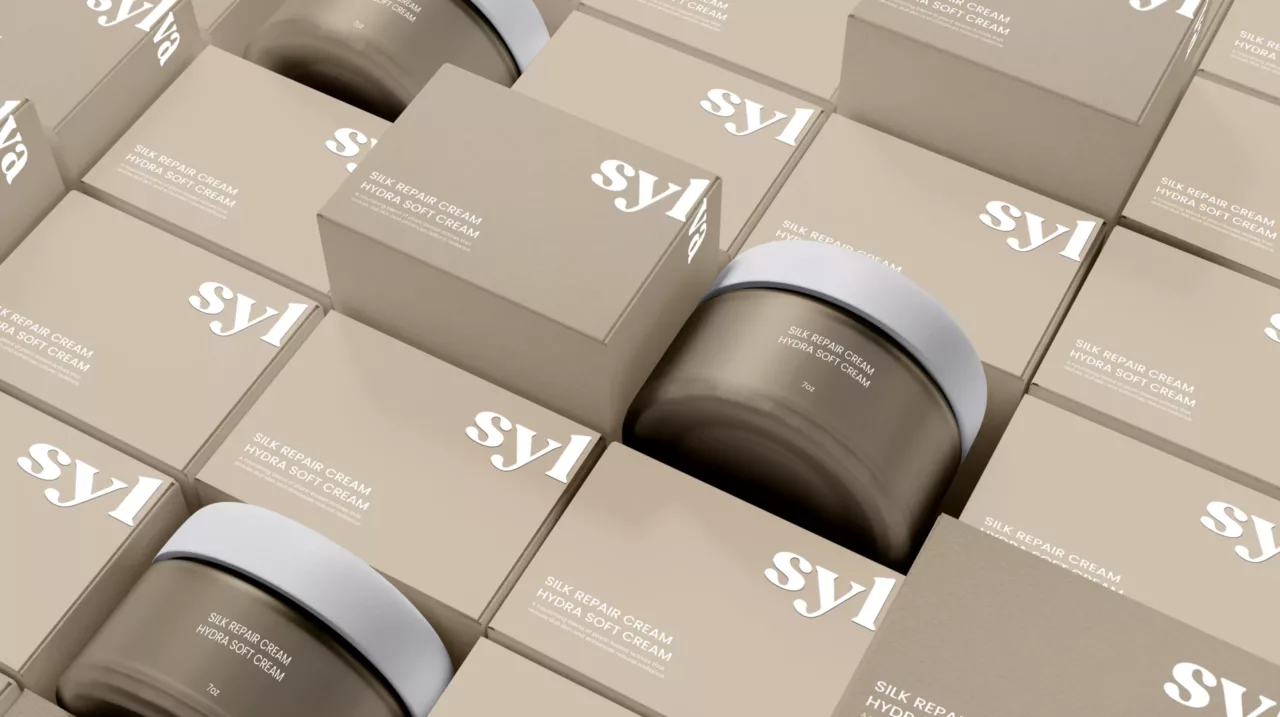
Most founders start their skincare business name search with a spreadsheet and a bad mood. You write down twenty names, half of them sound like a dermatologist’s waiting room and the other half are already taken on Instagram. Then you go looking for name ideas for your skincare business and land on a list of 150 generic options with no explanation of why any of them would work for you specifically.
That’s the gap this article closes. You’ll get real name ideas organized by the kind of skincare brand you’re actually building, a working framework for testing a name before you fall in love with it, and the one step almost every naming guide skips: making sure the name you pick actually functions as a logo.
114 skincare business name ideas by category
Different skincare businesses need different naming instincts. Scan the category closest to your positioning first, then pull from the naming formulas below if nothing quite fits. Once you’ve settled on a name, the next decision is how it looks. Our guide to skincare logo design walks through the visual styles, formats, and mistakes to avoid before you brief anyone.
Clinical and science-forward names
- Cellbright Labs
- Skin Theorem
- Bare Dermis Co.
- Formula Skin
- Compound Skin Co.
- The Molecule Bar
- Skin Index
- Derma Method
- Pure Formula Labs
- Clinical Glow
- Skin Data Co.
- The Ingredient List
- Actives Lab
- Skin Protocol
- Bond Skin Science
- Verified Skin Co.
- Lucid Derma
- Skin Standard
Botanical and natural names
- Wildroot Skin
- Fernbrook Botanicals
- Sable & Sage
- Amber Hollow
- Thistle & Bloom
- Meadowlight Skin Care
- Rootwell Botanicals
- Willow Bark Co.
- Hazel & Fern
- Clearwater Botanicals
- Sun Petal Skin
- Terra Bloom
- Grove & Glow
- Mossgrove Naturals
- Birchwood Skin Co.
- Field & Flora
- Wild Sage Skin
- Driftwood Botanicals
Luxury and boutique names
- Marlowe Skin Studio
- Aurelia & Co.
- The Gilt Jar
- North Star Skin Atelier
- Chateau Skin Co.
- Velvet Ledger
- The Quiet Luxe
- Maison Derma
- Ivory Lane Skin Care
- The Private Formula
- Hôtel Skin
- Silk Row Skincare
- The Reserve Collection
- Marchetti Skin Studio
- The Glass House Skin Co.
- Fine Line Atelier
- The Editor’s Skin
- Solene & Co.
Minimal and modern names
- Basic Skin Co.
- The Skin Edit
- Plain Sight Skin Care
- Skin Form
- Neutral Skin Co.
- The Skin Brief
- Fewer Skin Co.
- Blank Slate Skin Care
- Skin Grid
- Unfiltered Skin Co.
- The Skin Draft
- Skin Object
- Quiet Skin Co.
- Skin Studio No. 2
- The Skin List
Playful and Gen Z names
- Glow Getter Skincare
- Cheeky Cream Co.
- Dew Point Skin
- Barefaced & Co.
- Skin Snack
- Glow Up Girl
- Slather Skin Co.
- Pore Decisions
- Glass Skin Club
- Dewy Does It
- Skin Flex
- The Glow Report
- Splash Skin Co.
- Skin Crush
- Zit Happens
Men’s skincare names
- Field Kit Skin Co.
- Anchor & Ash
- Groundwork Skin
- Ledger Grooming
- Flint & Fade
- Trade Skin Co.
- The Daily Shave Co.
- Iron Jaw Skin Care
- Basecamp Skin Co.
- Northbound Grooming
- Stonewell Skin Co.
- The Workman’s Kit
- Ridge Skin Co.
- Standard Issue Skin Co.
- Forge & Skin
Sensitive and gentle skin names
- Gentle Ground Skin Co.
- Bare Comfort Skin Care
- Soft Landing Skin Co.
- The Calm Formula
- Tender Skin Co.
- Low Reaction Skin Care
- Easy Skin Co.
- The Gentle List
- Skin at Rest
- Mild Manner Skin Co.
- Quiet Comfort Skin Care
- The Safe Formula
- Skin Ease Co.
- Featherlight Skin Co.
- Calm Base Skin Care
None of these are meant to be lifted exactly. They’re starting points, use one as-is if it clicks, or run it through the naming formulas below to make it genuinely yours.
What makes a skincare business name actually work?
A good skincare business name does three things at once. It signals what the brand is about without spelling it out too literally, it’s short enough to say out loud without repeating yourself, and it survives being typed into a search bar, a social handle, and a product label without turning into gibberish.
Say your name out loud to someone who’s never heard it. Can they spell it back to you? If not, you’ve got a discoverability problem before you’ve sold a single serum.
Product name or business name: are they the same thing?
No, and conflating the two is a common mistake. Your business name is the umbrella (the company customers trust and return to), while a product name can be more specific, seasonal, or even playful, since it doesn’t carry the same legal and branding weight. A brand called Fernbrook Botanicals can absolutely sell a product called “Midnight Reset Serum” without confusing anyone. Treat the business name as the foundation and give yourself room to get more creative at the product level.
Once you’ve got a shortlist, the fastest way to stress test it is to picture it on packaging, not just in a text document. That’s usually where a brand identity package earns its keep, because a name that reads fine in a spreadsheet can fall apart the moment it needs to sit on a jar next to your logo.
Skincare business name ideas by category
Different skincare businesses need different naming instincts. A clinical, ingredient-led brand and a cozy botanical line shouldn’t sound the same, even if they’re solving similar skin problems.
For clean, clinical, science-forward brands, think names that sound like they belong in a lab notebook rather than a candle shop. Bare Dermis, Cellwell, Skin Theory, and Compound Skin Co. all lean into precision and ingredient credibility, which works well if your positioning is active ingredients over ambiance.
For botanical and natural lines, the goal is texture and place. Wildroot Skin, Fernbrook Botanicals, Sable & Sage, and Amber Hollow all suggest something grown rather than manufactured, which matters if your customer cares about where things come from.
For luxury and boutique positioning, restraint does more work than adjectives. Marlowe Skin Studio, Aurelia & Co, The Gilt Jar, and North Star Skin Atelier all avoid the trap of stacking words like “luxe” and “elite” on top of each other, which tends to read as trying too hard rather than actually feeling premium.
For playful, personality-driven brands aimed at a younger or more casual audience, a little wordplay goes a long way. Glow Getter Skincare, Cheeky Cream Co., Dew Point, and Barefaced & Co. all give you room to have a voice on social media without sounding like everyone else’s aesthetic serum brand.
And for men’s skincare and grooming, the instinct should be toward function and grit rather than “beauty” language borrowed from elsewhere. Field Kit, Anchor & Ash, Groundwork Skin, and Ledger Grooming all sidestep the trap of just adding “for men” to an existing feminine-coded name, which customers notice and generally don’t love.
None of these are meant to be copied wholesale. Use them as a starting point for the category of name that fits your positioning, then adapt the actual word to something that’s genuinely yours.
What naming formulas actually work for skincare brands?
Underneath every good name is usually one of a handful of structures. Knowing them makes brainstorming faster because you’re not starting from a blank page every time.
The founder-plus-descriptor formula pairs a real or invented personal name with a functional word, like “Marlowe Skin” or “Aurelia Beauty.” It works because it feels like a person stands behind the brand, which matters a lot in a category where trust drives purchase decisions.
The compound-word formula fuses two real words into one, like “Groundwork” or “Wildroot.” It reads as more ownable than a single dictionary word and is usually easier to secure as a domain, since two words squeezed together are less likely to already be taken.
The evocative single-word formula picks one word, often slightly unexpected, and lets it carry the whole brand: something like “Dew” or “Thistle.” This is the riskiest formula for search visibility (more on that below) but the strongest for pure brand recall once you’ve built awareness.
The Latin or Greek root formula borrows a root word and reshapes it, which is how you end up with names like “Cellwell” or “Dermis” derivatives. It signals scientific credibility fast, which is useful for actives-heavy or clinical lines.
Picking a formula first, before you start freewheeling on actual words, keeps your shortlist coherent instead of feeling like five different brands competing for one business.
Naming is the cheap part of this process. The part that actually costs money, and where most founders underestimate the budget, is turning that name into a full visual identity.
How do you check if a skincare business name is already taken?
Before you tell a single friend your new name, run it through three checks in this order: trademark, domain, and social handles. Skipping the order matters, because trademark conflicts are the only one of the three that can force you to rebrand after launch, sometimes years in.
Start with the USPTO’s Trademark Electronic Search System (TESS), which is free and covers registered and pending marks in the United States. A name doesn’t have to be an exact match to cause a conflict either. Something close enough to confuse a customer in the same category, like a near-identical name for another skincare line, can still get you a cease-and-desist.
From there, check domain availability, and don’t panic if the exact .com is gone. A slightly restructured domain (adding “skin,” “co,” or “beauty”) is a completely normal workaround and won’t hurt your branding as long as your actual business name stays clean everywhere else.
Last, check the handle across the platforms your customers actually use. You don’t need every handle to match perfectly, but a wildly different username than your business name creates friction every time someone tries to find you.
If your shortlist survives all three checks, you’re in good shape. If it dies at step one, better to find out now than after you’ve printed labels.
What names actually attract customers?
Customers respond to clarity first and cleverness second. A name that instantly signals “this is a skincare brand for sensitive skin” will usually outperform a beautifully abstract word that requires a tagline to explain what the business even does.
Here’s the honest nuance most naming guides skip: if you’re a solo esthetician or a local skincare business that depends on people finding you through Google Maps or local search, an abstract or poetic name can actually work against you. Something literal enough to include “skin” or “esthetics” tends to perform better for local discoverability, even though it scores lower on pure brand personality. That’s a real tradeoff, not a rule to ignore. If most of your customers will find you through search rather than word of mouth or social, weight your decision accordingly.
Outside of local search, the names that convert tend to promise an outcome or a feeling rather than describing an ingredient list. “Renewed Radiance” tells a customer what they’ll feel. “Hyaluronic Complex No. 4” tells them what’s in the bottle. Both have a place, but they’re not interchangeable, and picking the wrong one for your audience is a quieter mistake than most founders realize until conversion rates confirm it.
Does your name work as a logo?
This is the step almost nobody covers, and it’s the one that actually determines whether your name holds up long term. A name isn’t just a word. It’s the raw material for a wordmark, a monogram, or a symbol that has to work on a tiny Instagram avatar, a giant storefront sign, and a product label all at once.
Some names are naturally logo-friendly. Short, punchy, asymmetric names (think two syllables with an interesting letter shape) tend to give a designer more to work with. Long, evenly-weighted names can still work, but they usually need a monogram or icon to carry the weight visually, since the full wordmark won’t scale down cleanly.
Before you commit, sketch your top two or three names in a plain sans-serif font and squint at them. Does one letter combination pop out? Does it look balanced at business-card size and at billboard size? A few minutes of this exercise will tell you more than another hour of brainstorming new names. For the deeper mechanics of what makes a mark actually work, these logo design principles are worth a read before you lock anything in.
The name is step one, not the whole project
A great skincare business name buys you a few seconds of attention. What you do with that attention, meaning the logo, the color palette, the typography, and the guidelines that keep it all consistent across a hundred future decisions, is what actually builds the brand. And that part doesn’t have to take the six to eight weeks most agencies quote.
Brandframer builds complete brand identity systems, logo, color palette, typography, and full guidelines, in 48 hours, across three fixed-price plans starting at $280. Ten years and thousands of completed projects mean the process is refined enough to skip the parts that don’t move the needle, without skipping the parts that do. If you’ve landed on a name from this list or built your own using the formulas above, the next move is turning it into something that looks as sharp as it sounds.