What is brand identity (and why it makes or breaks your business)
 Jun 09,2026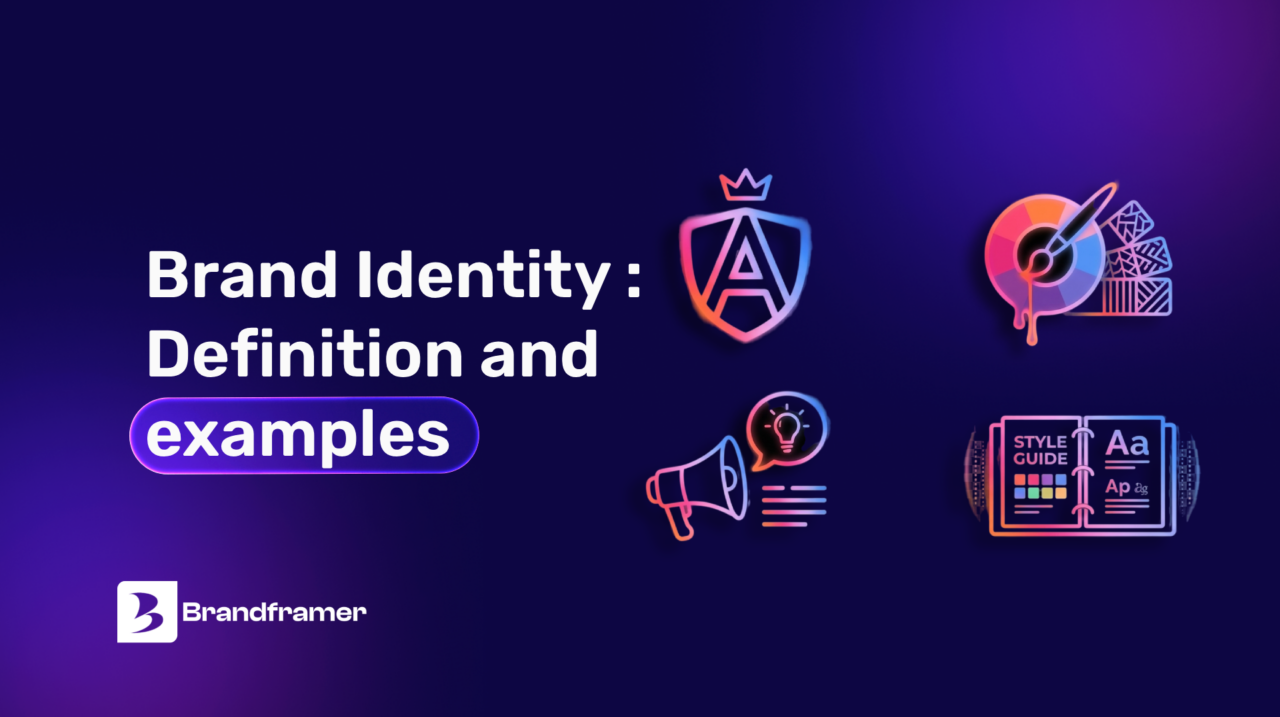
You’ve built something real. The product works, the offer is clear, you know who you’re selling to. But when someone lands on your website, sees your pitch deck, or stumbles on your social profile, something doesn’t click. They move on. That’s not a traffic problem, or a pricing problem, or a sales problem. That’s a brand identity problem.
Most businesses treat brand identity as decoration. Something you get to after the “real work.” But research found that 76% of consumers say they would buy from a brand they feel connected to over a competitor. A business without a coherent visual and verbal identity loses credibility before a single word is read, because the market doesn’t wait for you to figure out who you are.
So let’s define what brand identity actually is, what it’s made of, and why getting it right is one of the highest-leverage decisions any business can make.
What brand identity actually means (not the textbook version)
Brand identity is the complete system of signals your business sends into the world. It includes your logo, yes. But also your color palette, your typography, your tone of voice, your name, your visual language, how your emails sound, and the feeling someone gets three seconds after landing on your homepage.
Think of it the way you’d think about a person. Two companies can operate in the same industry, offer comparable products, and charge similar prices. One builds a loyal customer base. The other competes on discount. The difference is almost always how they present themselves. Identity precedes trust, and trust precedes revenue.
Brand identity is also distinct from brand image, and that distinction matters. Your identity is what you deliberately construct and project outward. Your image is how your audience actually perceives you. The gap between the two is where most branding problems live. You can’t fully control perception, but you can dramatically reduce that gap by building a sharp, intentional identity first.
Why most brand identities fail (regardless of company size)
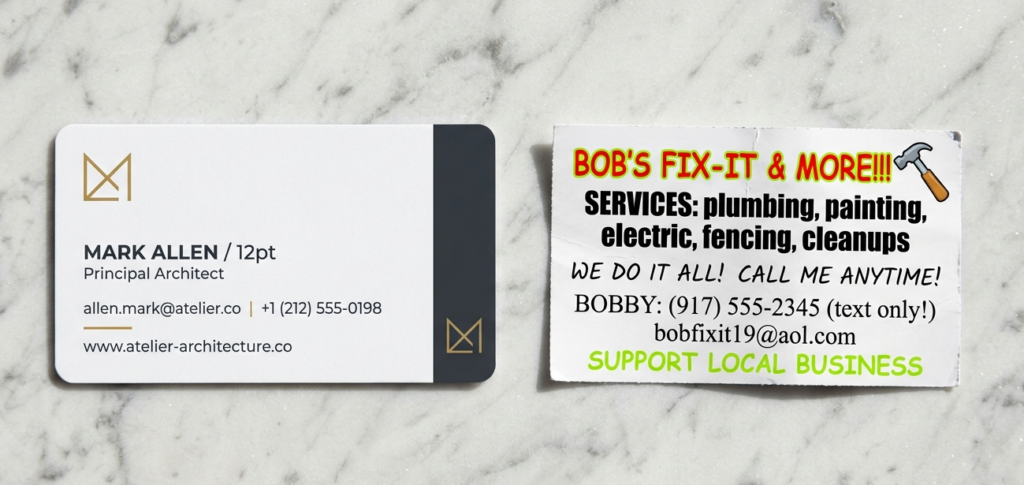
The most common failure isn’t poor design. It’s inconsistency. A business picks a font in one place, uses a different color scheme on their socials, writes website copy in a formal register and LinkedIn posts in a completely different voice, and then wonders why customers don’t seem to “get” them.
It doesn’t work. Humans process visual and verbal cues simultaneously, and when those signals contradict each other, trust erodes. A premium offer packaged with a generic stock photo and a mismatched font isn’t perceived as premium. It’s perceived as unfinished. That applies whether you’re a 3-person startup or a 300-person company going through a rebrand.
The second failure is confusing identity with aesthetics. Aesthetics are the surface. Identity is the system beneath it. Your colors carry meaning. Your typography conveys personality before anyone reads a word. Your verbal tone signals who you’re for and, just as importantly, who you’re not for. Everything has to cohere.
And the third failure is timing. New businesses delay identity work until they “have traction.” Established businesses hold onto outdated identities long after the market has moved. Both mistakes are costly.
The core components of a strong brand identity
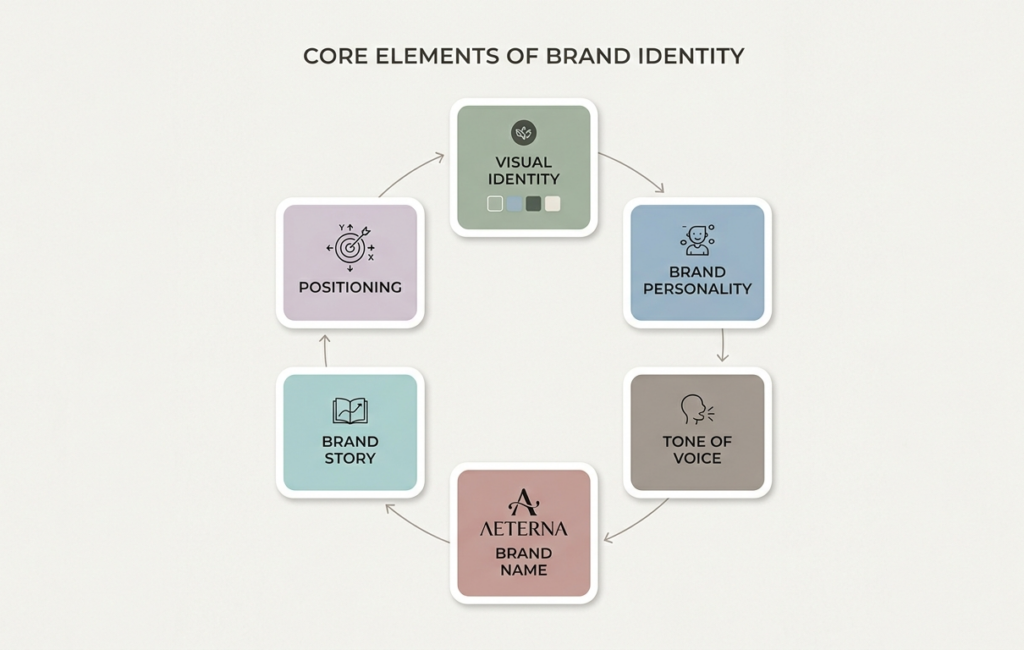
A complete brand identity system includes several interconnected elements. They don’t work in isolation, and skipping any one of them creates gaps that audiences feel, even if they can’t articulate why.
The logo is where most founders start. If you’re trying to understand what makes a strong one, our guide to logo vs brand identity is the clearest place to begin.
Visual identity is the most immediately visible layer. It includes your logo, color palette, typography, iconography, imagery style, and the visual grammar that governs how these elements work together across formats. Research from the University of Loyola found that color alone can increase brand recognition by up to 80%. Logo shapes matter too: circular forms tend to evoke community and approachability, while angular shapes read as energy or precision. None of this is arbitrary. It’s a language your audience reads before they’re even conscious of it.
Brand personality gives your business a human character. Is it authoritative or accessible? Irreverent or refined? Playful or precise? Kapferer, one of the most cited theorists in brand strategy, argued that brand personality fulfills a psychological function: it allows people to either identify with a brand or project themselves into it. A vague personality produces no connection. A sharp one creates loyalty.
Tone of voice is how your personality sounds in practice. It shapes your website copy, your email sequences, your social content, your customer service interactions, even your error messages. Tone of voice can range across several spectrums: formal or casual, serious or playful, enthusiastic or matter-of-fact, irreverent or respectful. The specific combination you land on should reflect both your brand personality and your audience’s expectations. Consistency here is what makes a brand feel alive rather than assembled from templates.
Brand name and tagline are underestimated by most businesses at the identity stage. A name that’s difficult to spell, awkward to say, or generic in its category is a structural liability. It makes SEO harder, recall weaker, and differentiation nearly impossible. Your tagline, when it exists, should compress your positioning into a single memorable phrase.
Brand story is the narrative that makes your values and purpose legible to the world. Not a polished “about us” paragraph, but a coherent origin and direction that customers can actually connect with. People don’t just buy products or services. They buy into stories that resonate with something they already believe. This applies to B2C brands building emotional loyalty and to B2B businesses establishing authority and trust in equal measure.
Brand messaging and positioning define where you sit in the market, who you serve, who you don’t, and why your offer exists in a category of its own. You can’t build a coherent identity without clarity here. Everything else, visuals, voice, story, flows from this foundation.
Brand identity vs. branding: one distinction that clarifies everything
These two terms get used interchangeably and they shouldn’t be.
Branding is the ongoing process. It’s the sum of every action you take over time to shape how your business is perceived: campaign decisions, customer experience design, how you handle a public mistake, what you associate your name with.
Brand identity is the documented foundation that branding is built on. It’s the deliberate system defining what your business looks and sounds like. You build it once, refine it as you grow, and then apply it everywhere consistently.
A business with strong identity but no branding strategy has a beautiful system with no execution behind it. A business investing in branding without a defined identity is spending budget to broadcast a message that doesn’t cohere. The right sequence is always identity first, then execution.
What a brand style guide actually does for your business
Once your identity is defined, it needs to be captured somewhere accessible. That’s what a brand style guide is for. It’s the single source of truth that brings together your logo usage rules, color codes, typography system, imagery guidelines, tone of voice principles, and messaging frameworks into one document.
Without it, every new team member, every agency, every freelancer, every contractor interprets your brand differently. Small inconsistencies accumulate. And over months and years, the identity you built gets diluted by a hundred small decisions made without a reference point.
A brand style guide doesn’t have to be a 60-page PDF. For most businesses, a concise, well-structured document covering the essentials is enough to maintain coherence across all touchpoints. What matters is that it exists, and that people actually use it.
When does brand identity matter most?
It starts mattering the moment you make your first impression. That could be a cold email, a referral mention, a Google result, or a social post. But there are specific moments where a weak identity costs the most.
Customer acquisition is the most obvious one. A prospect who visits your site after a recommendation and finds a visually inconsistent, low-effort presentation second-guesses the quality of what you’re actually selling. The signals contradict the promise.
Fundraising is another. Investors evaluate founders and leadership teams partly through the lens of how well they understand their own positioning. A pitch deck that looks generic or incoherent signals strategic confusion, not just aesthetic weakness.
Hiring is a third, and it’s frequently overlooked. Talented people choose employers partly based on how professional and coherent a company presents itself. Your brand identity is part of your employer brand whether you intended it to be or not.
And for established businesses, a weak or outdated identity creates internal friction too. When your team doesn’t have a clear visual and verbal reference, every piece of communication becomes a negotiation. That’s time and energy spent on problems that a solid identity system solves once.
One honest note: if you’re in the earliest possible stage of validating a new idea with a concierge MVP and no customers yet, brand identity isn’t the priority. Prove the concept first. But the moment you’re presenting to anyone, whether customers, partners, or investors, identity is already working for or against you.
Build your brand identity in 48 hours
If you’re at the point where you know your identity needs work, the gap between where you are and where you need to be is smaller than you think. Brandframer delivers complete brand identity systems built for founders and growing businesses, in 48 hours. Starting at $280, you get a professional visual and verbal identity that positions your business clearly and consistently from day one. No drawn-out discovery process. No months of back-and-forth. Just a system that works, ready to deploy.
If you’re done improvising your first impression, that’s the next step.